Tuesday, 15 November 2016

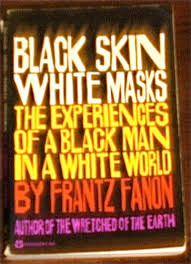
paper no. 11 - Theme oF Black Skin White Mask


To evaluate my assignment, click here


Theme oF Black Skin White Mask

NAME : HARIYANI KISHAN .R

BATCH: 2015'17

ROLL NO :17

PAPER NO : 11 (POST COLONIAL LITERATURE)

SUBMITTED TO :DEPARTMENT OF ENGLISH
M.K.BHAVNAGAR UNIVERSITY

EMAIL ID :kishanhariyani1992@gmail.com


INTRODUCTION:-


 "Dark Skin White Masks"1952 composed by "Frantz Fanon". In this novel fanon discussing a great many man whom they have purposely ingrained with dread and a complex of inadequacy.
A solitary line however would be sufficient. All it needs is one straightforward answer and the dark question would lose all significance.

“What does man want?”
“What does the black man want?”

She should state that a Black is not a man .much of the time the dark man con not exploit his plummet into a veritable damnation. Man is not just the potential for reluctance or refutation. On the off chance that is be genuine that awareness is supernatural. What's more, the issue of affection and comprehension. Man is a "yes" resounding structure vast harmonies. Blacks are numerous who are dark at the end of the day attributable to a progression of full of feeling issue they have subsided into a universe.

Just some of you will think about that it was so hard to compose this book.

The dark man needs to be white. The white man is frantically attempting to accomplish the rank of man. This exposition will endeavour to comprehend the Black-White relationship.

The white man is locked in his whiteness.
“The Black Man in his Blackness.”

A few Whites view themselves as better than Blacks.

Some dark need to demonstrate no matter what to the whites the abundance of the dark man's mind and equivalent insight.

Ex-Black or White it's not a conceived by individuals it is an attitude by a general public to a White people awesome and astuteness.

As agonizing as it is for us to need to state this three is however one predetermination for the dark man and it is white. In any case, the investigation we are attempted is mental to feel that way.

Blackman is not an individual question at is a mental and sociogery. Blackman must wage the battle on two levels society does not escape human-impact and man is the thing that brings society into being. Likewise truly these levels are commonly reliant. In this levels see to a protest and subject in the public eye.

This book is a clinical study. Those it will I accept have made a stage in the right bearing. What's more, this issues additionally all human being in a general public. In this thought additionally a present dependably the fabricated future. What's more, this future is not that of the universe, but rather every much the eventual fate of my century, my nation and my reality.

The initial three sections manage the dark man in advanced times. She takes the contemporary dark man and his states of mind in white words. So perished a few parts.
  • The black man and Language:-

Clench hand to believe that dialect it's generally feeble. The black man gang's two measurements. One with his kindred blacks the other with the whites. A black man carries on distinctively with a white man than he does with another black man additionally an inept to a reality yet it not only for a man likewise a white man. These are target actualities that state reality. It is not to a circumstance and comprehended to the occupation done. Furthermore weak to a made progress and it is a barren to a dialect. Be that as it may, the takes after the more the dark the French dialect and white likewise he gets the shading turn into a genuine person.

Why constantly black man legitimize his position in connection to dialect. Dialect turn into a divine being so why just dark man endured to the life. In all plays them same suchivtion there is a capital so the issue is the same. How heavenly are the plane trees thus numerous different things that individuals with nothing to do get a kick out of the chance to ramble about?

“To speak like a book”
“To speak like a white man”

  The black man entering France reads a giants the myth of the martini can who swallows his he all work on it end enter into open conflict with it. There is a psychological phenomenon that consists in believing the world will open up as borders are broken down. They meet and talk. And the new returnee is quickly given the floor because they are waiting for him. The wearing of European clothes whether is often native.
The woman of French floor and stated to a

“The power of Language”

  And even if Monsieur Breton were telling that truth I don’t see where the paradox ides. I don’t see why there should be any emphasis because after all time creasier is Martingale.
French would represent recourse to t language as a second language they have learned.
Black will retort we should be honoured that a white man such as Breton writes such things about us.
  • The Woman Color and The White Man:-
Man is a development of adoration an endowment of self, the last phase of what is regularly called moral introduction. Each awareness is by all accounts ready to show proof of these two components at the same time or then again. In comprehension wonders of this request the expert and the phenomenologist have an intense employment and men have a genuine romance, genuine love.

In this section gave to the relationship between the lady of shading and the European male. We should endeavour to decide to what degree valid love stay unthinkable the length of this sentiment inadequacy or this Adler magnification.

"I would have gotten a kick out of the chance to wed however with a white man. Just, a shaded according to an each privilege to be concerned." This with the exception of that it could be said brings to be cornered. This expects the being. One day lady by the name of Mayotte capelin complying with an inspiration whose reasons are hard to handle sat down and composed 202 pages on her life in which the most absurd.

Mayotte cherishes a white man unequivocally. He is her grease. She requests nothing, do minds nothing with the exception of a little whiteness in her life. And after that she asks herself whether he is great looking or monstrous. She scholars "All know is that he had blue eyes, fair hair, a pale appearance and I cherished him." And dark man has a dread and blue eyes.

  • The Man of Color and The White Woman:-
A White woman like a White man. She like white man she says she loved like a white man because she was a white man. Her love opens the illustrious path that leads to total fulfilment. White civilization and worthiness become mine. Thirty years ago a black man of the darkest of hues in full coitus with a vivacious blonde exclaimed “Long live schoelcher”
“We shall endeavour to understand the case of the black man” study in depth the attitude of the black man. This is the crux of the matter. “He does not understand his race.” And “Negro from their colonies but also haven’t clue about the black man they have shaped in their image. Incapable of integrating incapable of going unnoticed he starts conversing with the dead or at least the absent.
“What a least the absent derma. My old pal venue is real charter. He never takes his-nose out of his books expect to scribble.

“Negro we would like a lot of white boys to be like.” Negro adopted Mather land and they also a shame to a white man and in this way we also come fist and an adopted a language and an whiteness it’s not over it a related a birth it is not think that to a over mind set by society and become far and they think that become a good and upper of society.
He needs a white man then she cooled a brother they don’t become black man. An attitude of recrimination toward the past a lack of self-esteem and the impossibility of making himself understood Listen to Jean who can describe the desperation of the little hothouse kind.
In the end of the chapter see a woman understand not only colour but also other quilts see the man. Black man not only a different to the black white.

  • Conclusion:-
Fanon display in black skin white mask to a color and they power to a their skin but it just a mask but over mind set that the white man is a civilization and they greet not to other and also a essay see to the “Black Skin White Masks.” also in which analyzes the black psyche in the midst of white dominated culture .The book is half manifesto for overcoming racial expression and half psychological analysis as Fanon presents from his personal experience ,Black psychology, Black progressive since civil rights, problems for black in education etc.but this is not in limited in 21st century also black and white people suffering from superior and inferior complex .in America and struggle with them between native American and settler .

Reference :

To evaluate my assignment, click here


Paper no 10:- Major Theme in The Old Man and The Sea


To evaluate my assignment, click here


Major Theme in The Old Man and The Sea


Hariyani  Kishan Kumar .R


Paper no 10


M.A. Sem:3

2015'17


Submitted To :M.K.Bhavanagar University


Preface:- 

The plot of "The old man and the sea" is evidently basic yet entirely planned. Most Critics concur that the topic of this book is man's ability to withstand and rise above hardship of time and condition. The thought is passed on through Santiago's undertakings with the Marlin and with the sharks. Hemingway delineates in fortuitous detail basic long term hardships to which Santiago is subjected. His bold reaction is summoning both physical vitality and inventive vision to counter the powers testing him. The significant subjects of "The old man and the sea" are as under.


The undefeated:-

Santiago concentrates on this solidarity and considers himself to be a piece of nature than as an outer rival contending with it. He can't be vanquished by whatever hardships be full him. "The old man and the sea" has practically an indistinguishable topic from "the undefeated" the story is composed a quarter century prior. The old angler who has not made a catch for eighty-four days is in an indistinguishable human circumstance from the maturing matador of that story. This novella gives another definition and intending to Hemingway function in general. It gives the reader a quicker familiarity with the way that Hemingway views moral stamina as the most vital esteem in life.
Love:-
Santiago comes to feel his most profound love for the animal that he himself chases and murders. He feels the desire to vanquish this extraordinary fish not just for his physical need however much more for his wet blanket and his calling. The colossal marlin is not at all like the other fish which the old man gets. The marlin is an otherworldly more than a physical need. The marlin is as well, a commendable foe for the old man. Amid his extreme test Santiago comes to pity and afterward to regard and to love the marlin. At last he feels that there can be no triumph for either in the equivalent battle between them. The conditions which united them have made them one. Furthermore, however he executes the immense fish the old man has come to love it as his equivalent and his sibling. This topic gives the basic structure inside which the old man's Heroic independence and his affection for his kindred animals show up and capacity and which gives them their definitive essentialness.
Feeling of guilt:-

Throughout the story Santiago is given heroic proportions. He fights the great fish with epic skill and experience. “A man can be destroyed, but not defeated”, he says in the course of his fight with the sharks. But beyond Santiago’s heroic individualism and beyond the love and brotherliness which he comes to feel for the marlin. There is a further dimension to the old man’s experience. In killing the great marlin and in losing it to the sharks, the old man realizes the sin into which men full in going far out beyond their depth or beyond their true place in life. In the first night of his struggle with the marlin, the old man begins to feel loneliness and a sense almost of guilt for the way in which he has caught it. After killing the marlin he feels no pride of accomplishment, no sense of victory.

Solidarity and interdependence:-

Human solidarity and relationship consequently constitute a prevailing topic of this novel. The subject, it is to be noted is fortified by the utilization of a couple of images of whom the most imperative are baseball and the lions. The baseball champion, DiMaggio, is a steady wellspring of motivation to the old man. The possibility of the African lions is, in like manner, a wellspring of quality to him. Another image fortifying the topic is that of the execution. There is the picture of the torturous killing. Which is conspicuously utilized towards the end of the story, joins Santiago with Christ? Every one of these images infers solidarity and association not separation or estrangement.

Heroism:- 

                               Triumph over squashing difficulty is the heart of heroism. With the worry of Santiago the angler to be a chivalrous insignia for mankind, his tribulations must be prevailing. Triumph however is never last, as Santiago's fruitful killing of the marlin appears. There would be no motivation to incorporate the last 30 pays of the book. Hemingway vision of courage is Sisyphean, requiring constant work for quintessentially transient closures. What the legend does is to face misfortune with pride and effortlessness, henceforth Heming way's Neozoic accentuation on restraint and alternate features of his concept of masculinity. What we accomplish or come up short at remotely is not as noteworthy to heroism as the comporting ourselves with internal respectability. As Santiago says, "Man is not made for thrashing a man can be decimated however not vanquished".


Manhood:

Heming path's optimal of masculinity is about in distinct from the perfect of chivalry examined previously. To take care of business is to carry on with respect and poise and to take care of business is to torment, to acknowledge one's obligation without grievance, and above all to show a most extreme of discretion. The representation of gentility, the ocean is described explicitly by its whim and absence of poise. On the off chance that she did wild or evil things it was on the grounds that she couldn't help them. The representation of manliness, the marlin is portrayed as extraordinary, excellent, quiet, and honourable. Santiago steels him against his agony by letting himself know.

Suffer like a man, or a fish
In Hemingway’s ethical universe, Santiago shows us not only how to live life heroically but in a way befitting a man.


His Christian virtues:-

There is something of the Christian saint about Santiago. He has achieved the most difficult and saintly
of all Christian virtues, that is humility. It is humility so absolute that is involves” no loss of true pride.” There is even in him a suggestion of Saint Francis, in his attitude to animal life, and especially to birds. Moreover at various moments in the story Santiago affirms the major Christian virtues like faith, hope and charity. In the very first dialogue between Santiago and the boy marlin we learn that the boy’s father has not much, faith, Santiago and mandolin have it:

“He hasn’t much faith.”
“No,” the old man said. “But we have. Haven’t we?”
“Yes”, the boy said.
Towards the close of the novel, the old man tells himself:

“It is silly not to hope. Besides it is a sin.”
As for charity we see it clearly in his generous love of men and animals.

Pride:-

Hemingway’s treatment of pride in a novella is ambivalent. A heroic man like Santiago should have pride in his actions, and as Santiago shows us.” Humility was not disgraceful and it carried no loss of true pride.” It is apparently Santiago’s pride which presses him to travel dangerously far out into the sea,” beyond all people in the world,” to catch the marlin. While he loved the marlin and called him brother, Santiago admits to killing it for pride, his blood stirred by battle with such a noble and worthy antagonist. Some have interpreted the loss of the marlin as the price Santiago had to pay for his pride in travelling out so far in search of such a catch. Contrarily, one could argue that this pride was beneficial as it allowed Santiago an edifying challenge worthy of his heroism. In the end, Hemingway suggests that pride in a job well done, even if pride drew one unnecessarily into the situation, is a positive trait.

Success:-

The novel is to be sure wonderful for its weight on what man can "do" and on the world as a field where courageous deeds are conceivable. In this universe everybody has a part to assume and Santiago's part is to seek after the considerable marlin: "that which I was conceived for", he reflects. To be a saint intends to set out more than other man. To be a saint intends to open oneself to more serious threats and in this manner all the more extraordinarily to chance the conceivable outcomes of annihilation and profundity. Santiago satisfies this trial of chivalry about such a man it is crazy to state that things are done to him and that he does pretty much nothing. On the eighty-fifth day Santiago pushes a long ways past the standard angling region. That is itself accomplishing something significant. Since he goes out too far in the ocean, he gets the considerable fish. The fish is so intense it hauls his boat much more remote so far that he can't get back so as to keep the marlin being eaten up by the sharks. The enormity of the experience and the unavoidable nature gives people boundless open doors for the colossal experience. The experience conveys with it an overwhelming heartbreaking cost. Santiago's accomplishment drums up some excitement among the anglers in his town. The visitors of the story confuse the marlin for a shark however they too are struck by a feeling of the exceptional.

Conclusion:

  There are many themes in this novella but the main theme is heroism. We can see some heroic deeds which are done by the character Santiago fight with nature and the last sentence “ A man can be destroyed but not defeated”. In this way nature also performed their role and man performed his role in man v/s nature very deep and philosophical meaning consist in this novel .

Reference :

1


PAPER NO :9 Critical Evaluation of “The Waste land”


To evaluate my assignment, click here


Critical Evaluation of “The Waste land”


NAME :HARIYANI KISHAN


ROLL NO :17


BATCH :2015'17


PAPER NO :9 ( THE MODERNIST LITERATURE)


SUBMITTED TO :DEPARTMENT OF ENGLISH .M.K.BHAVNAGAR UNIVERSITY


EMAIL ID :kishanhariyani1992@gmail.com


Critical evaluation of “The Waste land”

Preface
' The Wasteland' is a master piece of renowned English poet T.S. Eliot ,which appeared on the scene of English Literature in1922 .it is the modern epic which in its concentrated form takes in it reference from ancient Roman and Greek mythologies and allusions to ancient Elizabethans, Victorian and modern writers .it has influences of the anthropological works such as; Ritual and Romance and The Golden Bough by Jessie.L.weston and James .G.Frazer respectively .
In this poem Eliot depicts his whole . In this work dead poets and ancestor assert their immorality most vigorously
“The Waste Land” contains five parts like


1.  The Burial of the Dead
2.  A Game of chess
3.  The fire sermon
4.  Death by water
5.  What the thunder said etc.


“The Waste Land” is a multi-layered poem in which several things can be included to study critically, they are given below

·         Title of the poem
·         Theme of the poem
·         Myth in the poem
·         Symbolism in the poem etc.

Now let’s have a glance on these above indicated points in detail.

Title of the poem:

 T.S. Eliot has spoken to his response as this poem entitled "The Waste Land". It is a representative poem made in the style out of beautiful elusiveness, "Formally" the image has been portrayed as a quite a bit of thoughts and a graceful cryptogram. Accordingly it is the poem of myth and images of a progression of trains of musings whose parts look detached with each other.

The title of the lyric "The Waste Land" has been enlivened by Miss Dessie L. Weston's book from Ritual to Romance. It alludes to a waste land depicted in one of the Grail Romances. The Land was administered by the fisher King.

He alongside his knights violated diminish ladies who were watchmen of the Grail puzzles. In light of that shock, he get to be inept and fell sick, and his property get to be squander materialistic world as the waste land, and its ruler as the advanced materialistic man. He has befouled the riddles of life and being, to be specific the spirit and turn out to be profoundly weak and has gotten to be squander profoundly. In this manner, one might say that the title of this poem "The Waste Land" is proper and extremely well picked by Thomas Stern Eliot.


Themes of the poem:

"The Waste Land" has numerous topic and every one of these subjects have been extremely all around expounded by T.S Eliot, who passes on these all subjects through imagery and obviously with the assistance of different legendary method, here in this ballad "The Waste land", T.S Eliot shows his thoughts so it is particularly hard to comprehend this lyric at a first perusing however an individual needs to peruse twice or thrice then and after that he/she can get a handle on the focal thought of the poem.

Here are several themes, which can be observed;

· Death
· Rebirth
· Love
· Lust
· Water
· Spiritual degradation

So now let’s discusses these themes in detail.


Death:

Death is the significant subject of this lyric as two segments of this poem 'The Burial of the dead' and 'demise by water' alludes or shows to this topic. What entangles matters is that demise can mean life so as it were one jars say that by passing on, a being can make ready for the new lives. Thusly the death is the focal subject of this poem.

Spiritual degradation:

T.S Eliot has communicated what he felt about his territory in The Waste Land and how individuals step by step lost confidence in God and otherworldly rot is the primary topic of the lyric as in view of it just his property is squander arrive. In present day society there is a rot and otherworldly decline at whatever point the sexual capacity is avoided. So Spiritual Degradation can be taken as the fundamental thought of this poem.

Rebirth:

Here Rebirth can be a major theme which is found in this poem. The Christ images in the poem, along with many other religious metaphors, causes rebirth and resurrection as central theme of this poem.

Love:

Love is the main theme of this poem. Here in the poem many references can be noticed such as Tristan and Isodle in ‘Burial of the Dead’ and Cleopatra in a ‘Game of Chess’ and to the story of Tereus and Philomela suggests that love in the waste land is often destructive.

Lust:

Here T.S Eliot has very well depicted the theme of lust through this poem. T.S Eliot depicts the sin as something a akin to rape this chance sexual encounter carries with it mythological beggage.The violated Philomela, the blind Tiresias who lived for a time as a woman. Sexuality runs through the waste land taking centre stage as a cause of calamity in the ‘The Fire Sermon’.

Water:

“The waste land” lacks water and water also promises rebirth at the same time however water can bring about Death. T.S Eliot sees the card of the drowned Phoenician sailor and later titles the fourth section of this poem ‘Death By water’ when the rain finally arrives at the close of the poem it does suggest the cleansing of sin, the washing away of misdeeds and the start of a new future, however with comes thunder and therefore perhaps lightening.

Myths in the Waste Land:

There are many myths which can be observed in this poem. T.S Eliot’s The waste land is an important land mark in the history of English poetry and one of the most talked poems of the same Age. Here T.S Eliot described the mythical background in his poem. This mythical technique can be elaborated as given below.

·The Grail Legend
· The King Fisher
· Myth of Tiresias
· Myth of Vegetation and fertility etc.

Now let’s illuminate these myths in detail.

The grail Legend:

Here in this poem this myth is envisioned as The Grail was the glass or plate utilized by Christ for his last dinner, in that container the blood of the Savoir was accumulated when he was executed. The Myth about this vessel was that at have gained restorative and marvellous properties so the outcome is that it turned into a protest for immaculateness or one sort of commitment and love. The spear used to pierce the sides of Christ and kept with it. Be that as it may, a period the first Grail was bafflingly vanished and a significant number of the striking Knights staked their lives and them hunting down this vessel. It was for the most part trusted that the vessel was now and then could be found in the sky as the gliding saucer yet it could just observe by those, Knights who were virginal magnificence.
King Fisher:
As indicated by this myth King Fisher was the ruler named King Fisher. It was one of the locales where Grail adore had been long ago vogue, and a sanctuary Known as Chapel Perilous, still remained there, broken and feeble, as a forlorn commemoration of what once seemed to be, yet later had stopped to be. It was said that the lost Grail was covered up in this house of prayer. Around then the ruler himself had turned into a physical wreck, injured and feeble, thus. It was whispered, of a transgression submitted by his soldiery in insulting the modesty of a gathering of nuns joined to the Grail sanctuary.


The impotency of the Fisher King was reflected sympathetically in the land of which he was the head and ruler. It had become dry and barren, the haunt and home of want and famine. The King, however, was waiting with hope, despite his illness, that one day the Knight of the pure soul would visit his star-crossed kingdom, march to the Chapel Perilous, answer questions and solve riddles.

Myth of Tiresias:

Here in this poem this myth often comes up to the end of this poem. Tiresias is represented as a bi-sexual in The Waste Land as he was blind but he has the gift of prophecy and immortality. Many stories are same like Tiresias story. According to one story this wise Theban soothsayer in his youth once saw the goddess Athena naked in a pond and goddess struck him blind but his mother was a friend of hers so she bestowed upon him.

Symbolism:

Here in this poem there are many symbols which can be elaborated in a separate essay because here T.S Eliot has used several kinds of myths and collage of images which causes some problem to understand this poem.

Water:

Here in this poem Water a predominant symbol of birth, death and resurrection appears through the poem as in the opening water signifies the giver of life. Yet it also stands for death. “Fear death by water”, or those are pearls that were his eyes. The symbolic meaning depends with a deceased Phoenician.


The Fisher king :

So, here Eliot shows the Fisher King as symbolic of humanity robbed of its sexuality potency in the modern world and connected to the meaninglessness of urban existence.

There are other symbols like

·         Drought
·         Animals
·         Landscape
·         Thunder
·         Religion etc.

Conclusion:
In short this poem The Waste Land is an extremely rich poem and it has numerous understandings so we once in a while find such an assortment of images aside from in T.S.Eliot's Wasteland. Living creatures, creature or creepy crawly have been the critical image. Thusly, this lyric can be explained from different perspectives. but it is difficult to comprehend on the grounds that so many topic ,myths and philosophical significance comprise in this lyric so we can state it is one sort of scrapes of poet which is reflected here as type of sonnet and Eliot look forward of each field of individual so this commitment of T.S.Eliots' stay important and motivational in The field of Modernist Literature


Reference:


To evaluate my assignment, click here


Saturday, 2 April 2016

MY PRESENTATION SEMESTER 2

Paper no 5 The Romantic Literature
Topic         John Keats as Romantic Poet


To Evaluate my presentation click here 


John keatys as romantic poet l from kishanhariyani


To Evaluate my presentation click here 


Paper no 6 The victorian Literature 
Topic       General overview on Victorian Age


To Evaluate my presentation click here 


General over view on victorian Age from kishanhariyani


To Evaluate my presentation click here 


Paper no 7 Literay theory and Criticism 
Topic         Rasa theory 


To Evaluate my presentation click here 


Rasa Theory : AbhigyanShakuntalam from kishanhariyani


To Evaluate my presentation click here 


Paper no 8 The Cultural Studies 
Topic    Cultural studies Practice in Hamlet


To Evaluate my presentation click here 


cultural study in Hamlet from kishanhariyani


To Evaluate my presentation click here